Why would a buyer pay more for a neighborhood where you need a car to get lunch than for one you can walk to it?
That is the question sitting inside two Redfin numbers from earlier this year. As of February 2026, Barton Hills carried a median sale price of $1,489,950. Zilker, its next-door neighbor and frequent stand-in on Austin's "best of South Austin" lists, sold at a median of $1,037,500 over the same window. The gap is not small, and it runs in the opposite direction of what most buyers assume before they start touring.
Zilker is the more walkable of the two by a wide margin, with a Walk Score of 75 against Barton Hills' 36. Zilker also moves faster, with homes selling in a median of 107 days compared to 146 in Barton Hills during that same period. By the logic that usually prices Austin real estate, the neighborhood you can walk out of for a coffee and a hike should command the premium. Here it doesn't. Understanding why matters more if you are underwriting a purchase than if you are just touring open houses on a Saturday.
Two Neighborhoods, One Backwards Price Tag
Zilker and Barton Hills sit against each other along Barton Creek, close enough that a single wrong turn off Barton Springs Road can put you in either one. Zilker wraps around Zilker Park and stays within a short walk of South Lamar, Barton Springs Pool, and the restaurant row that runs along Barton Springs Road. Barton Hills sits further into the hillside, bounded loosely by Azie Morton Road, Rabb Road, and the stretch near Rae Dell and Barton Skyway, with its closest streets, Homedale Drive and Barton Hills Drive, backing directly onto the Barton Creek Greenbelt.
On paper, Zilker should win the pricing argument. It has the walkability, the restaurant density, and faster turnover. Instead, Barton Hills has posted the higher median sale price in every recent read of the data, including a March 2026 Redfin figure that put its median at $1,578,750 against Zilker's $1.1 million in the same period, a gap that also outpaces nearby Travis Heights at $926,000 and Bouldin Creek at $905,000.
What a Walk Score Actually Prices
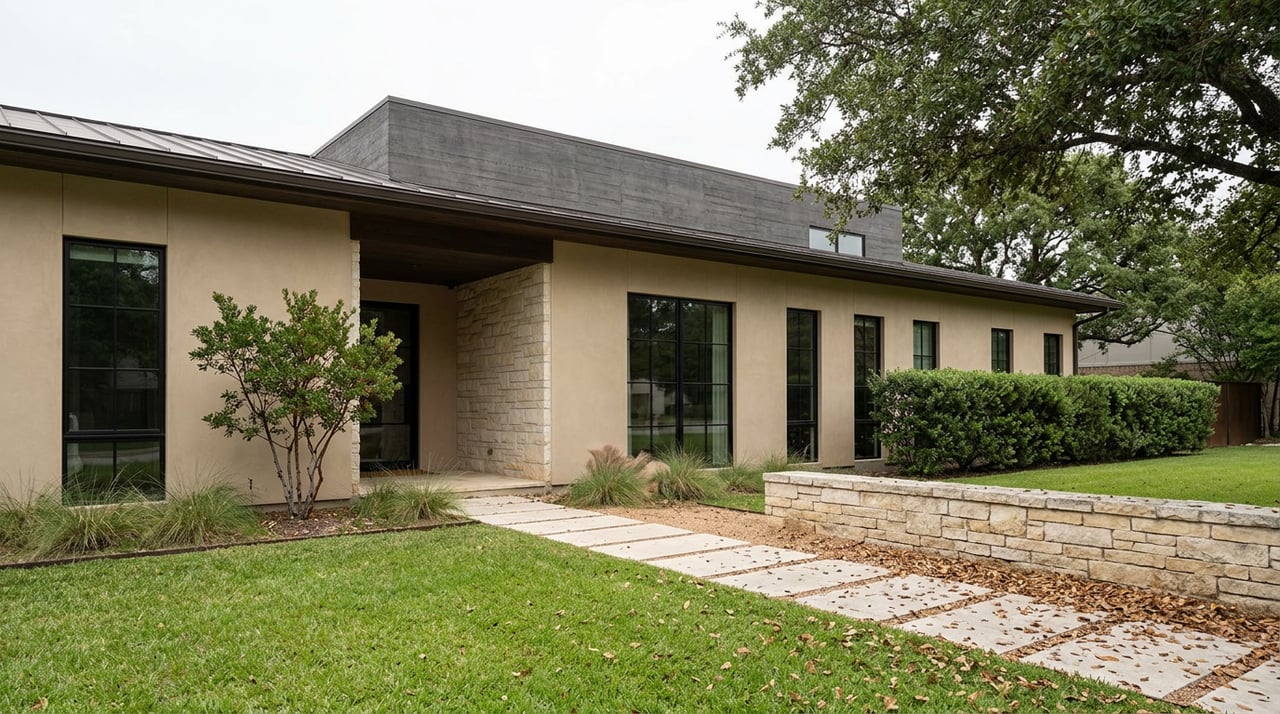
A Walk Score measures distance to amenities. It says nothing about what is sitting on the lot itself, which is where this story actually lives. Zilker's housing stock is a mix of original 1940s and 1950s bungalows on tight, urban-scale lots, the kind of parcel that made it one of the more attractive close-in neighborhoods when walkability alone drove demand. Barton Hills carries a wider range, from the same era of ranch homes up through larger new construction on what local builders consistently describe as premium, oversized lots along the Greenbelt edge.
Walkability is a proximity measurement. Redevelopment capacity is a land measurement. In a market where teardown and rebuild activity has become the dominant way both neighborhoods change hands, the land measurement is doing more of the pricing work than the proximity score.
The Number That Actually Explains It: Lot Size
Zilker has been described by Austin custom builders as one of the city's most active teardown and rebuild markets, and for a specific reason: its lots are compact, which means impervious cover limits, the citywide rule that caps how much of a lot can be covered by structure and hardscape, start shaping the footprint before an architect draws a single wall. Builders working in Zilker report premium new construction running $400 to $600 or more per square foot, a number that reflects how much design effort goes into making a small, cover-limited envelope live large.
Barton Hills works differently. Its lots, particularly the ones backing the Greenbelt near Homedale Drive and Barton Hills Drive, run larger, which gives a rebuild more room to work with before it bumps against the same citywide cover limits. A bigger lot supports a bigger footprint without the same design contortions, and that capacity gets priced into the land itself before a single truck shows up for demolition.
| Zilker | Barton Hills | |
|---|---|---|
| Walk Score | 75 | 36 |
| Median sale price (Feb 2026) | $1,037,500 | $1,489,950 |
| Median $/sqft (Feb 2026) | $740 | $680 |
| Median days on market (Feb 2026) | 107 | 146 |
| Lot profile | Compact, cover-limited, active teardown market | Larger, Greenbelt-adjacent, room to build |
Read the table straight and Zilker still wins on price per square foot, at $740 against Barton Hills' $680 in the same February 2026 window. That is the buyer paying for finished proximity. But the total sale price tells the redevelopment story, and total sale price is what a lender, an appraiser, and eventually a future buyer will actually transact on.
The Clue Hiding in Zilker's Own Numbers
Zilker's data gives away the mechanism if you look at two figures from the same Redfin release rather than one. Over the three months ending May 2026, Zilker's median sale price ran to $1.3 million, up 41.2 percent year over year. In that same window, its median price per square foot fell to $530, down 19.6 percent year over year.
A rising median sale price alongside a falling price per square foot is not a contradiction. It is a composition shift. The homes actually closing in Zilker right now are bigger than the ones that closed a year earlier, consistent with a wave of rebuilds maximizing whatever square footage the impervious cover limits will allow on a compact lot. Total price climbs because the house is larger. Price per square foot softens because a maxed-out compact-lot rebuild carries more incidental, lower-value square footage, garages, bonus rooms, mechanical space, than a smaller original bungalow priced purely on its walkable location.
What This Means If You're Underwriting a Rebuild
If you are comparing these two neighborhoods purely as a place to live, Zilker's proximity to Barton Springs Pool, the Ann and Roy Butler Hike and Bike Trail, and the South Lamar corridor is worth something real, and the market has always priced that in through a faster sale and a stronger per-square-foot number on finished homes.
If you are underwriting a purchase with redevelopment in mind, the math points the other way. A compact Zilker lot puts you into $400 to $600-plus per square foot construction costs against a footprint that impervious cover limits will cap early, which means every design decision is fighting for space. A Barton Hills lot near the Greenbelt edge, where Realtor.com reported a median list price of $1.52 million and a median of $590 per square foot across 56 active listings as of April 2026, gives you more room to build into before you hit the same citywide ceiling.
As of April 2026, Barton Hills carried 56 homes for sale at a median list price of $1.52 million, a median of $590 per square foot, and roughly 82 days on market, according to Realtor.com's monthly figures.
That $590 figure sitting well below Zilker's premium-build range is not a sign that Barton Hills construction is cheaper. It reflects a market where the land itself is doing more of the work, which is exactly the dynamic an investor-minded buyer should want to underwrite rather than discover after closing.
The Event Calendar Tax
Zilker's proximity comes with a cost that does not show up in a Walk Score. Zilker Park spans more than 350 acres and hosts the ACL Music Festival, Trail of Lights, and the ABC Kite Festival every year, which means the same streets that make daily errands easy also absorb traffic, parking pressure, and noise during peak event windows. Barton Hills sits close enough to reach Barton Springs Pool and the Greenbelt without fronting directly on the park's main event grounds, trading a slightly longer drive for a quieter street most weekends.
Neither tradeoff is objectively better. It depends on whether you are buying a lifestyle you will live in five days a week or a redevelopment you plan to hold and eventually sell.
Reading Both Against the Wider Austin Correction
Both neighborhoods are trading well above where the broader Austin market sits right now. The city of Austin posted a median sale price of roughly $530,000 in March 2026, itself down about 2 percent year over year, while the metro overall remains roughly 24 percent below its May 2022 peak. Inventory has loosened across the board, with the Austin metro carrying about 5.5 months of supply and an average 85 days on market as of March 2026.
Against that backdrop, the resilience in Zilker and Barton Hills is not surprising on its own. Austin's luxury segment above $2 million has held its pricing better than the broader market even as days on market have stretched, and both of these neighborhoods sit in the price band where that resilience shows up first. What is worth noticing is that the resilience is being driven by two different mechanisms in two neighborhoods a few blocks apart: one priced on proximity, the other on land capacity.
Frequently Asked Questions
Does Barton Hills' lower Walk Score mean it's a weaker long-term investment? No. The Walk Score measures distance to amenities, not the value of the land itself. Barton Hills' larger lots and Greenbelt frontage have consistently supported a higher median sale price than Zilker despite the lower score, which suggests the market is pricing redevelopment capacity ahead of walkability in this specific pair of neighborhoods.
Why would price per square foot fall in Zilker while the median sale price rises? It reflects which homes are actually closing. When more of a neighborhood's sales are new or rebuilt homes maximizing the square footage allowed under citywide impervious cover limits, total sale prices can climb even as the price per square foot softens, since larger footprints often include garages, bonus rooms, and mechanical space priced lower than a compact, purely walkable original home.
Are impervious cover limits the same across both neighborhoods? The citywide tree ordinance and impervious cover rules apply to both Zilker and Barton Hills, but how much they actually constrain a rebuild depends on the individual lot's size and slope. Anyone underwriting a redevelopment should confirm lot-specific limits before finalizing a purchase.
Whether you're weighing a finished home in Zilker or a redevelopment opportunity on a larger Barton Hills lot, the number that matters most is rarely the one on the listing page. If you want a second set of eyes on what a specific lot in either neighborhood can actually support, Peyton Thompson works both sides of this exact tradeoff every week. Let's Connect.
This article is general information, not legal, tax or financial advice. Consult a qualified professional about your situation.